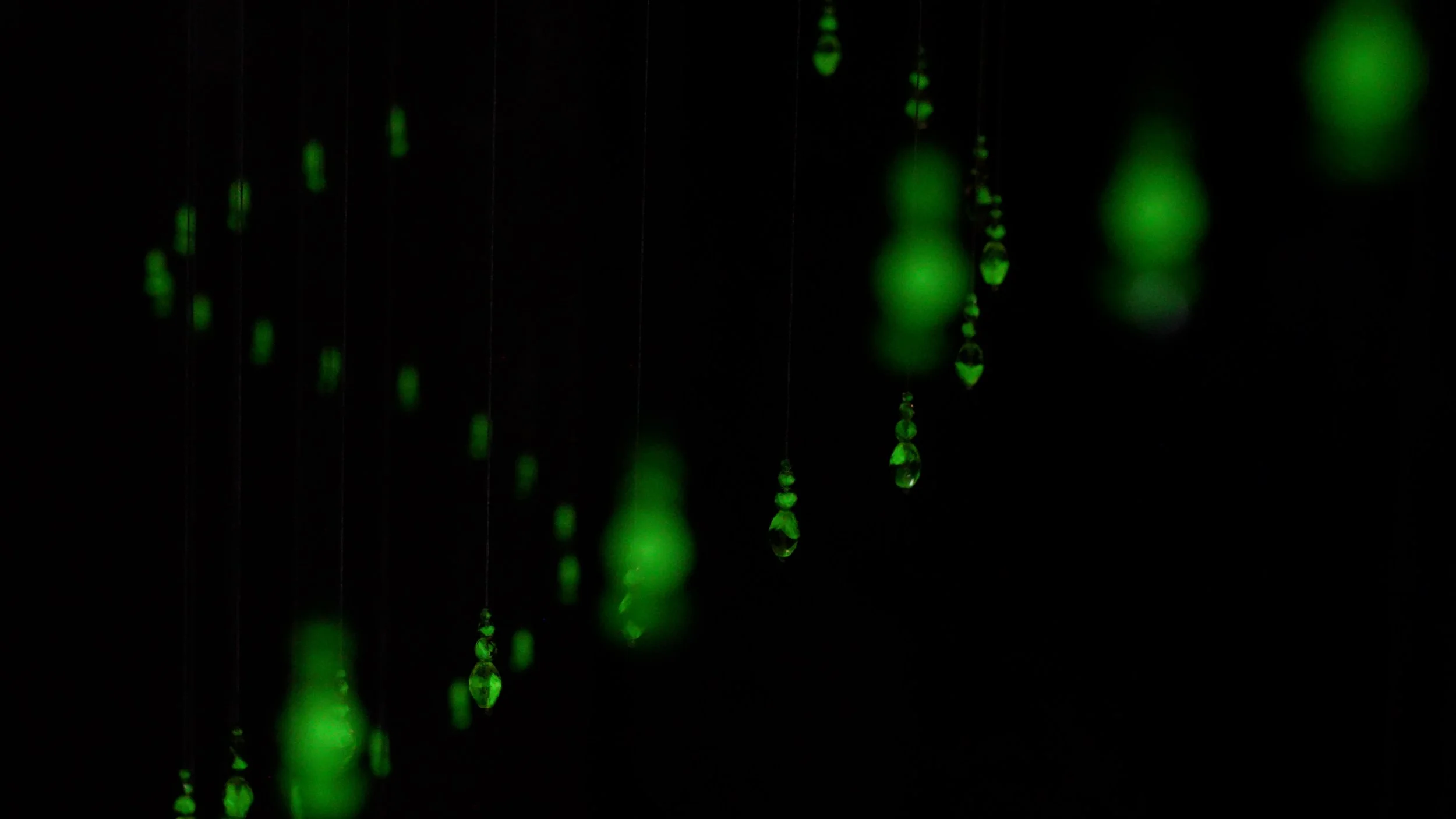
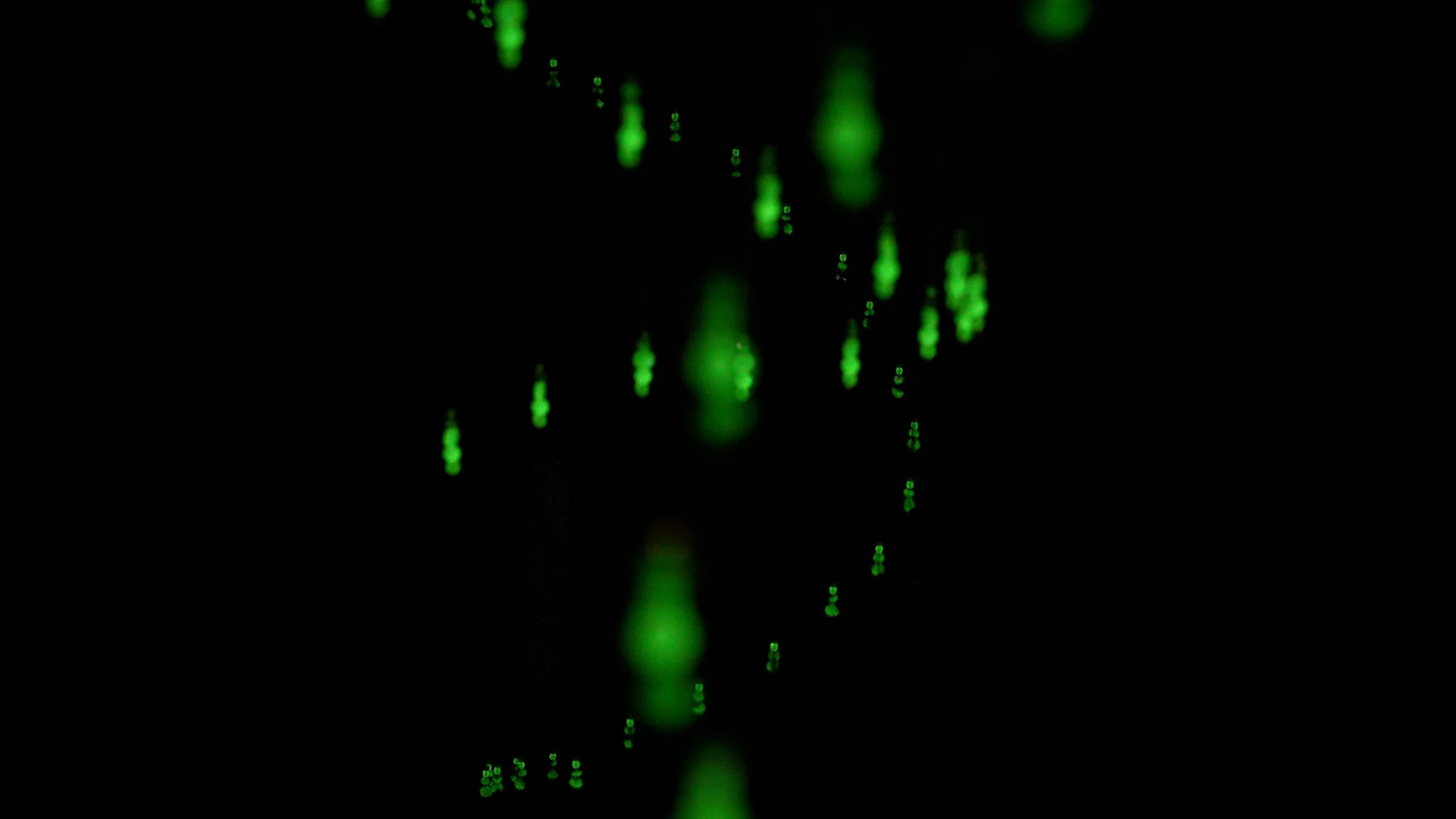
“Lumina” derives from the Latin word for subtle light or the faint presence of life in nature. This series seeks to capture the quiet emergence of invisible energies—the moment when something imperceptible begins to breathe into visibility.
The glass beads containing traces of uranium—once a symbol of atomic power—were widely produced in Bohemia (now the Czech Republic) from the early 19th to the mid-20th century. Initially, small amounts of uranium oxide were added as a coloring agent, and it was later discovered that under twilight or ultraviolet light, these glasses emit a beautiful fluorescent green glow. They became a sensation across Europe, yet during World War II, restrictions on civilian use of uranium abruptly brought their production to an end.
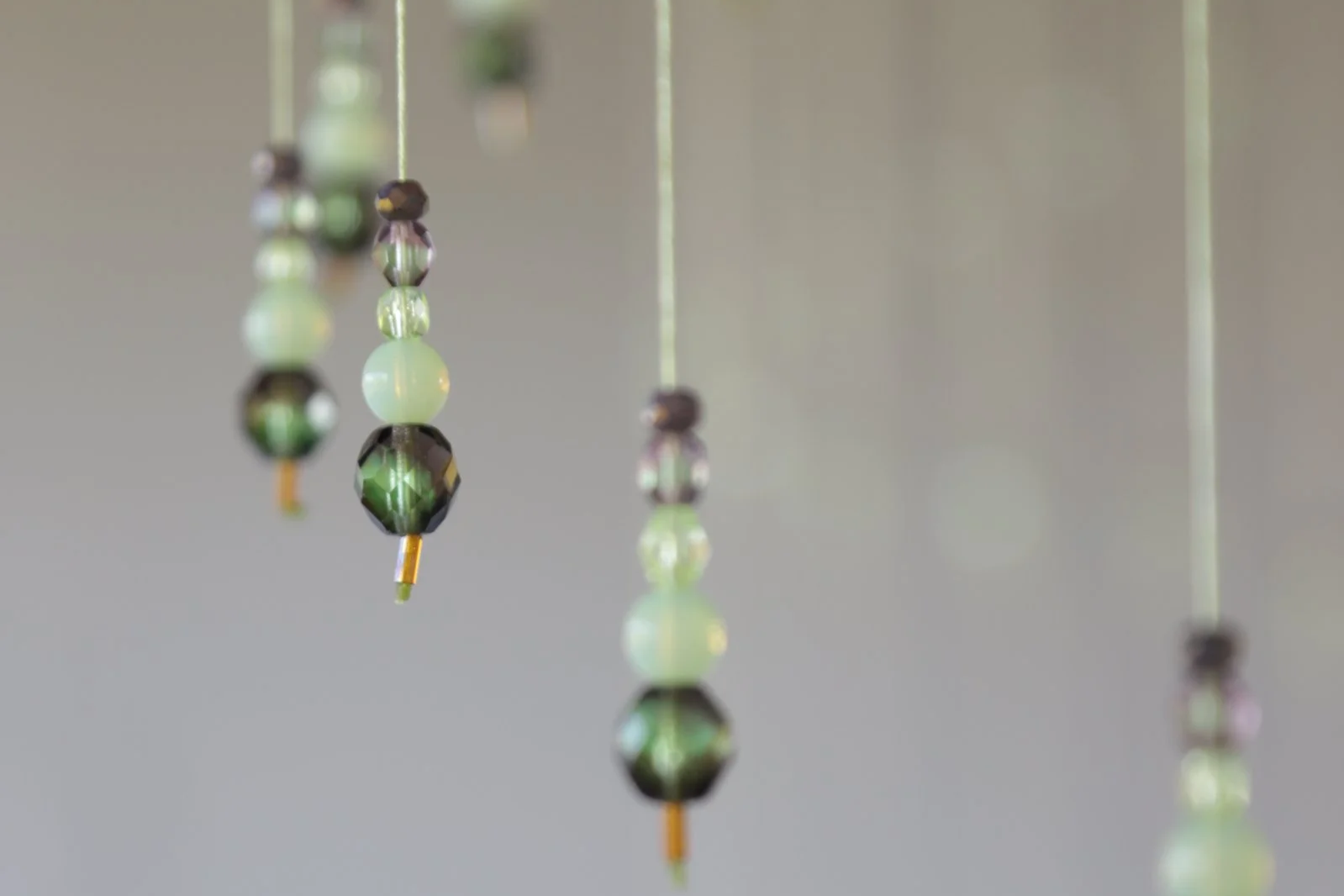
In this work, these Bohemian uranium glass beads—shaped by the changing tides of history—are interwoven with silk threads dyed with natural pigments such as lichens, alder cones, and kariyasu grass, materials that respond sensitively to subtle shifts of light and wind. Through them, the work explores the quiet presence of beings that exist between light and matter—unseen, yet undeniably there.
Note: Uranium glass beads, developed in Bohemia between the early 19th and mid-20th centuries, are a distinctive form of decorative glass known for their fluorescent glow under ultraviolet light and their finely handcrafted forms. Bohemian artisans employed mold-blowing, faceted cutting, coloring, and fire-finishing techniques, fusing minute amounts of uranium oxide into molten glass to achieve remarkable transparency and rich hues—sometimes producing layered, bi-colored gradations. Their refined craftsmanship and depth of color carry a warmth and subtle shimmer absent in industrial products, changing delicately with the angle of light and the passage of time.